
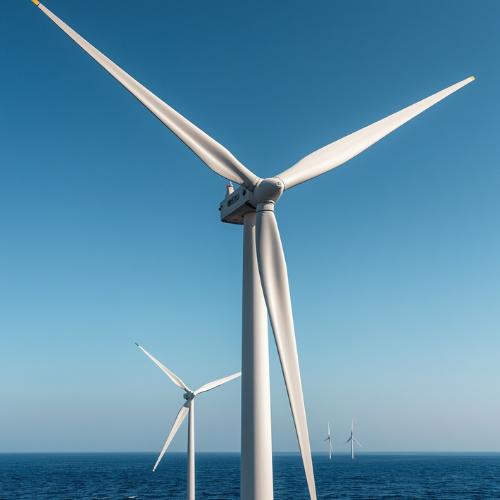

As the UK transitions towards renewable and clean energy generation, and further away from fossil fuels, off and onshore wind farms have very much formed the crux of this transition over the last few years – particularly following Labour’s election in 2024 – where wind and solar power dominated all green policies, strategies and headlines surrounding the UK’s ambitious Net Zero targets.
Sold as the key to achieving Net Zero, wind farms were undeniably prioritised over most other forms of renewable and clean energy; setting the precedent – not only for the UK’s Net Zero targets – but also our long term energy security.
Fast forward almost 2 years, then, and 2026 has seen a flurry of negative headlines surrounding wind farm projects that have entirely fallen by the wayside – Arven South, off the coast of Shetland, being a prime example of this.
And, unfortunately, it’s not surprising.
Offshore windfarms are notoriously expensive to build due to high initial CAPEX (Capital Expenditure), complex logistics & installation, and expensive operations & maintenance; and the further a farm is from the shore, the more expensive it becomes.
Add to this mounting construction material costs, the increased costs of transporting the power generated to the places its most needed (i.e. in and around the UK’s larger cities like London), and the local complexities of building off of Britain’s coasts, in places well known and well-used by local fisherman, for example, and successfully bringing offshore windfarms through planning, construction and into operation becomes especially difficult to achieve.
Not to mention the overarching and ongoing issues with the UK’s aging National Grid, making it almost impossible for new renewable and clean energy projects to simply connect to the system they’re being created for.
Essentially, the hope is high, the intent is there, but the infrastructure simply doesn’t exist as it needs to to enable most offshore wind farms to flourish.
Yet, the narrative of systemic failure isn’t the whole story.
While smaller, isolated projects like Arven South have faltered under the weight of outdated grid logic and fragmented planning, a new blueprint is emerging.
The industry is currently witnessing a shift from the ‘incremental’ era – where we tried to force-fit new tech into an old grid – to the ‘mega-project’ era. Nowhere is this shift more evident, or more necessary, than at Dogger Bank; it is a project that doesn’t just work in spite of the challenges mentioned; it is a project designed specifically to overcome them.
Why The Dogger Bank Offshore Windfarm Development is Different
HVDC Technology: Dogger Bank is the first UK wind farm to utilise HVDC (High Voltage Direct Current) transmission technology. Traditional AC (alternating current) cables lose significant power over very long distances, whereas HVDC systems are much more efficient for long-distance subsea transmission, allowing the project to transport massive amounts of electricity from 130–190km offshore with minimal energy losses.
Sheer Scale And Investment: the size of the Dogger Bank project distinguishes it from so many others; a massive 3.6GWs over 3 phases (A, B and C) that will comfortably provide power to 6 million UK homes. What’s more, the project has already created 2000 jobs across its lifetime, with an estimated 1600 more to come. Essentially, the sheer size of the project makes it economical as it costs the same to mobilise a heavy-lift installation vessel whether you are installing 50 turbines or 270; by building on such a massive scale, the “cost per turbine installed” plummets because you aren’t paying for mobilisation every few months. Alongside this, the converter stations are incredibly expensive, but when you spread the cost of it over 3.6GW, the cost per unit of electricity drops significantly.
Already Secured a Contracts for Difference: because the project was secured at scale, it could participate in the UK’s CfD auctions from a position of massive strength. As the project has such a high output, the developers could guarantee the UK government a very competitive, stable price for that power over 15 years. This stability turned Dogger Bank from a speculative construction project into a low-risk, long-term infrastructure asset that appeals to pension funds and institutional investors – investors love the predictable, massive revenue stream of 3.6GW more than the uncertain returns of smaller, fragmented projects.
The failure of smaller, isolated sites like Arven South wasn’t just a grid issue – it was an economic mismatch.
Smaller projects simply cannot absorb the ‘hidden’ costs of offshore installation, maintenance, and long-distance transmission, whereas Dogger Bank flips this logic on its head; by operating at the scale of a traditional nuclear power station, it creates the ‘economic gravity’ necessary to drag down costs, justify massive regional infrastructure investments, and provide the long-term price stability that the UK’s energy market desperately needs.
The New Way
If we continue to view offshore wind solely through the lens of individual site viability, we will continue to see project after project falter. The lesson of Dogger Bank is not just that ‘bigger is better’; it is that the rules of the game have fundamentally changed.
We can no longer afford to treat grid connection and long-distance transmission as an afterthought to be ‘worked around’; in the new era of energy infrastructure, those factors are the primary variables to be engineered into the business case from Day One.
As the UK looks toward 2030 and beyond, the ‘mega-project’ model offers a clear, repeatable, and economically sound blueprint – it is the only way to deliver the scale of energy security that our national grid – and our economy – demands. The question for policymakers is no longer whether we can build more offshore wind; it is whether we are prepared to overhaul our regulatory and planning frameworks to support the next generation of renewable infrastructure.
If we don’t, we risk leaving our energy transition stranded in the incremental era, waiting for a grid that is already ten years behind the ambition of the projects we are trying to build.




Thank you for sharing this article.
The piece highlights some of the key challenges facing offshore wind development, from grid capacity and transmission infrastructure to project economics and planning. It also provides an interesting perspective on how large-scale projects such as Dogger Bank may help shape the future of the UK’s energy transition.
We appreciate the contribution and look forward to sharing further insights and discussion from across the sector.
Thank you for your response. You’re absolutely right; while mega-projects like Dogger Bank demonstrate the technical and economic potential of wind, the success of the UK’s energy transition ultimately hinges on our ability to solve the systemic grid and planning hurdles that currently restrict the sector. I’m glad the article resonated, and look forward to continuing this conversation on how we can better align infrastructure strategies with ambitious generation targets.