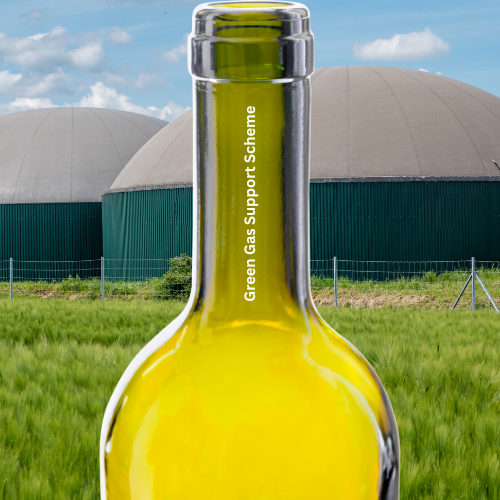

The government’s Green Gas Support Scheme, AKA GGSS – providing biogas plant producers with 15 years of financial support and essential revenue stability – is closing to new applications in the spring of 2028, with no replacement in sight.
And, as the end date approaches ever closer, the sector is becoming understandably jumpy; eager to squeeze every last penny of support out of a system that has underpinned renewable energy generation for a number of years – helping to secure anaerobic digestion’s cornerstone place in the UK’s decarbonisation strategy.
Indeed, the lack of a replacement, or announcement thereof, has led to a fair amount of confusion and panic in the sector; DESNZ acknowledge the importance of anaerobic digestion in achieving UK energy security and, perhaps more urgently, processing the massive influx of food waste coming from the ‘Simpler Recycling’ mandate, but have yet to share any concrete plans around future financial support for waste to energy plants.
This is particularly concerning when considering the lead time of an anaerobic digestion plant can sit anywhere between 1 and 5 years, covering feasibility studies and technical due diligence reporting, planning applications, construction and the commissioning phase, not to mention the rigmarole of securing a grid connection date whilst navigating any administration delays or particular complexities in the build or technology used; meaning that, anyone hoping to build an anaerobic digestion plant in the next 2 – 5 years, needs to secure funding support now.
Clearly, professionals within the sector got the memo and the scheme is currently experiencing high demand, with the available budget being tightly managed through Tariff Guarantee thresholds, leading to significant competition for limited support slots.
Needless to say, this is becoming quite the issue, contributing to a significant GGSS bottleneck, with viable projects being caught in a holding pattern and less developed projects taking up a large percentage of the slots, as developers rush to secure Stage 1 Provisional Tariff Guarantees for projects that may still be in the early development phase.
And, although the GGSS was originally designed to refine this process – specifically to move away from the era of “temporary equipment” setups that allowed speculative actors to secure support without delivering a permanent, viable facility – the current mechanics are inadvertently inviting history to repeat itself.
By prioritising speed of application over project maturity, we are seeing a return to the very behaviors the scheme was meant to curb.
The original intent of the GGSS was to provide a robust, long-term framework that ensured funding only reached projects capable of sustained operation, thereby reducing the risk of “ghost projects” falling off the grid or failing to reach completion.
Instead, we have arrived at a point where the rush to secure a Stage 1 Provisional Tariff Guarantee has become a race for a placeholder, rather than a commitment to high-quality engineering.
When policy does not demand proof of technical readiness or financial maturity as a prerequisite for entry, it effectively displaces the high-integrity projects, those that have invested in the necessary due diligence to guarantee long-term operational success, in favor of those that are simply first to the portal.
For the sector to deliver on its decarbonisation promises, we must pivot toward a maturity-based entry system that ensures support is directed at projects that have truly commercialised their technical risks.
Without this, we risk maintaining a bottleneck that benefits speculators at the expense of our national energy infrastructure and end up with a graveyard of viable projects that could have been.
Ultimately, however, what the sector desperately needs more than anything else is a practical GGSS replacement – long term, sustained support that incentivises biogas plant development across the country and recognises the vital place localised anaerobic digestion plants have in processing the 10 million tonnes of additional food waste being collected from our bins into renewable energy.