

When analysing the forces driving the UK’s transition to clean power, public discourse often focuses on high-level climate mandates, corporate ESG commitments, or ambitious national targets.
However, looking at adoption from the ground level reveals a much more pragmatic, economics-led reality.
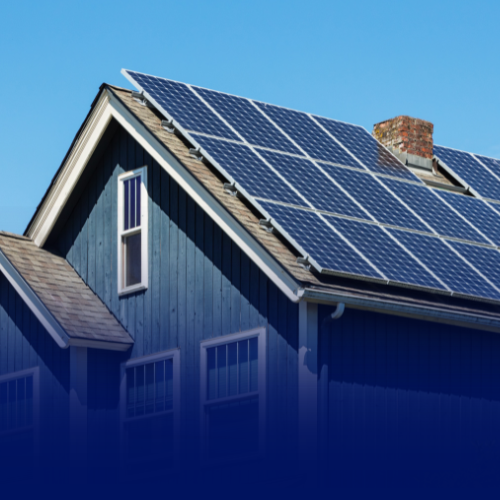
Recent consumer survey data from The Eco Experts’ 2026 Solar Satisfaction Awards highlights that 78% of UK homeowners investing in solar energy do so explicitly to lower their household energy bills, whereas a far smaller percentage – 49% – do so due to environmental concerns.
And this is particularly interesting, especially amidst recent headlines: that the overwhelming catalyst for decentralised renewable deployment is financial self-defense – a direct desire to reduce operational costs and insulate households from unpredictable energy markets.
This, coupled with a desire to achieve greater energy independence on an individual level; often choosing to pair domestic solar panels with battery storage in order to store and later consume the energy they generate rather than sell it into the National Grid.
This shift in consumer behavior offers a vital blueprint for the wider energy sector as, what is true for individual homeowners is equally true for commercial industries, regional hubs, and national infrastructure: true adoption and long-term security happen when clean energy is framed around price stability, localised control, and economic resilience.
Protecting Consumers and Businesses Against Market Volatility
The consumer push for localised generation comes against a backdrop of ongoing wholesale energy market turbulence.
This volatility was underscored again recently by regulator Ofgem, which announced planned intervention measures designed to shield energy suppliers and consumers against wholesale price swings.
While regulatory buffers offer temporary relief against market shocks, they address the symptoms rather than the cause.
The root issue remains our structural exposure to volatile fossil fuel imports and centralized transmission constraints.
Decentralised renewable energy – whether rooftop solar on a home or an Anaerobic Digestion (AD) plant powering an industrial estate – breaks this cycle by shifting generation closer to point-of-use.
When energy is generated and consumed locally, consumers and asset owners gain:
Long-Term Price Certainty: Fixing energy generation costs through localized assets protects users from global commodity price spikes.
Reduced Grid Dependence: Behind-the-meter generation and private-wire agreements reduce exposure to rising grid transmission fees and balancing costs.
Energy Independence: Generating clean power on-site gives both households and commercial businesses direct control over their daily energy budgets.
Building a Complete Localised Energy Ecosystem
While the solar satisfaction data highlights the clear demand for localised power, solar PV alone cannot solve the national energy equation.
Solar is an exceptional tool for daytime generation and peak shaving, but what happens when the sun isn’t shining? A regular phenomenon in the UK! To achieve permanent price reduction and total energy independence, we must expand our reliance across the entire spectrum of renewable technologies:
1. Solar Power (Decentralised & Flexible)
Solar provides rapid deployment and immediate cost reduction for domestic rooftops and commercial carports/facilities. As cell efficiencies continue to improve, pairing solar with battery storage enables behind-the-meter load shifting.
2. Anaerobic Digestion (AD) & Biogas (Dispatchable Baseload)
Unlike weather-dependent renewables, AD facilities process organic waste, agricultural residues, and slurry to produce continuous, 24/7 green electricity, heat, and biomethane. AD acts as a non-intermittent anchor, providing steady power regardless of wind or sunshine.
3. Energy from Waste (EfW) (Circular Economy & Power)
With the UK producing over 220 million tonnes of total waste annually, EfW infrastructure diverts residual waste from landfill while generating high-efficiency baseload electricity and district heating. It solves two critical challenges simultaneously: localised waste management and continuous energy supply.
Driving Down Prices Permanently
To permanently lower energy prices for homes and businesses across the UK, our reliance on centralised, fossil-fuel-dominated power generation must be replaced with a robust, diversified renewable mix.
However, moving from localised consumer demand to utility-scale energy security requires seamless execution – the primary barrier to expanding solar, AD, and EfW infrastructure is no longer public appetite or policy support; it is navigating grid connection queues, interface engineering risks, and long-lead procurement hurdles.
At Paul Winter Consulting Ltd (PWCL), we bridge the gap between initial feasibility and commercial operation. By conducting rigorous, independent technical due diligence, we ensure that renewable energy projects – from local AD plants to complex waste-to-energy facilities – are built on solid engineering foundations, contractually aligned, and fully bankable.
When technical ambiguity is removed from the build, capital deploys faster, project risks decline, and the vision of lower, permanently stable energy prices becomes a physical reality.