Heat Network Development: Growing Policy Momentum and What It Means for EfW
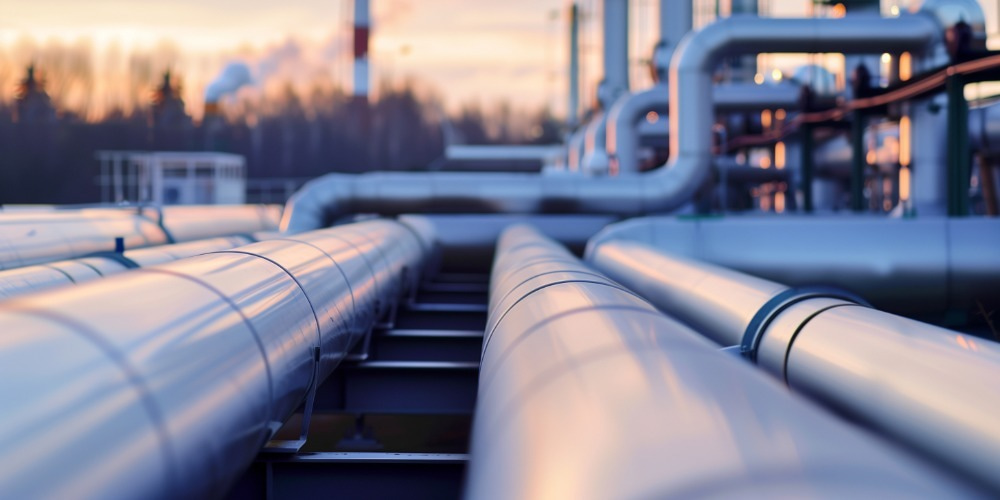
Heat networks are moving back up the UK energy agenda, and for the EfW sector, that shift could prove strategically significant.
Recent policy developments show active work by the Department for Energy Security and Net Zero (DESNZ) to bring heat networks into the centre of the UK’s heat decarbonisation agenda, including the Warm Homes Plan with ambitious network deployment targets and the government response to the heat network zoning consultation, both aimed at accelerating deployment, improving regulatory frameworks and strengthening investment certainty.
Why policy focus is increasing
Government strategy is increasingly recognising that electrification alone will not decarbonise heat at the pace required. In dense urban areas in particular, heat networks are seen as a scalable way to deliver low-carbon heat to homes, public buildings and industry.
Policy developments now include:
-
Heat network zoning powers to identify areas where networks are likely to be most viable
-
Movement toward formal regulation under Ofgem
-
Continued funding support through schemes such as the Green Heat Network Fund
-
Stronger technical standards and consumer protection frameworks
Taken together, these measures are designed to reduce investor risk and create clearer long-term signals for infrastructure development.
What this means for energy from waste
EfW plants are uniquely positioned in this conversation.
As stable, baseload facilities located close to urban demand centres, many sites are technically well suited to supplying heat networks. Where infrastructure can be developed, EfW heat offtake:
-
Improves overall plant efficiency
-
Displaces gas consumption in local networks
-
Strengthens decarbonisation credentials
-
Enhances long-term asset value
While carbon capture and storage (CCS) continues to dominate much of the decarbonisation discussion, heat utilisation remains one of the most immediate and proven routes to improving plant performance.
Parallel development, not competition
Importantly, heat networks and CCS are not mutually exclusive pathways. Operators increasingly view them as parallel strategies: maximise efficiency through heat offtake where viable, while progressing longer-term carbon capture solutions as policy and infrastructure mature.
The current momentum from DESNZ suggests that heat networks are no longer a peripheral opportunity — but a structured part of national heat decarbonisation planning.
For the EfW sector, the question is shifting from “Is heat viable?” to “Where and how fast can we connect?”





Please sign in or register for FREE
If you are a registered user on Energy from Waste Network, please sign in