The UK’s Next Industrial Construction Boom: Decarbonisation Infrastructure?


As the UK continues its transition toward a low-carbon energy system, much of the public and media attention remains focused on renewable and clean generation: offshore wind, solar, and battery storage.
But behind the headlines, a potentially more significant construction boom is gathering pace: the build-out of industrial decarbonisation infrastructure.
Carbon Capture, Usage and Storage (CCUS), hydrogen production, energy-from-waste facilities, nuclear new builds, and industrial retrofits are shaping what could become one of the UK’s largest and most complex waves of industrial construction in decades.
From Energy Transition to Industrial Transformation
The UK’s Net-Zero ambitions are not solely about building new sources of electricity, they are also transforming how industry produces, consumes, and manages energy and - importantly - greenhouse emissions.
That transformation is increasingly materialising through large-scale industrial assets; process plants, pipelines, terminals, retrofit programmes, and supporting infrastructure.
These projects are often capital-intensive, highly regulated, and technically complex, with multi-year development timelines and multi-stakeholder delivery structures.
From a construction and project management standpoint, these projects resemble traditional heavy industry and oil and gas megaprojects as much as they do renewable energy schemes.
Carbon Capture As Regional Mega-Programmes, Not Single Projects
The UK’s emerging CCUS clusters are evolving into region-scale infrastructure programmes.
These include capture facilities at industrial sites, compression and transport pipelines, offshore storage hubs, and marine terminals.
Each cluster represents multiple interdependent construction projects, requiring coordinated sequencing, shared utilities, and aligned permitting and funding frameworks.
Delivering CCUS at scale will demand a level of programme integration and project controls more commonly associated with large industrial portfolios.
Hydrogen: A New Process Industry
Hydrogen production is transitioning from strategy papers to physical infrastructure, where both blue and green hydrogen projects are moving through feasibility, FEED and funding stages, with industrial offtakers increasingly linking decarbonisation plans to hydrogen availability.
Electrolyser plants, reformers, storage facilities, pipelines and industrial retrofits introduce process engineering challenges comparable to petrochemical facilities.
For developers and investors, hydrogen is not a single asset class but a portfolio strategy: one that will require robust programme governance and disciplined delivery models.
Industrial Utilities in Disguise
Energy-from-waste (EfW) and anaerobic digestion (AD) facilities are increasingly being recognised as critical industrial infrastructure rather than niche waste projects, as new plants, carbon capture retrofits, and corporate offtake agreements are embedding these assets into industrial and municipal energy systems.
These developments bring together waste logistics, process engineering, grid or private-wire integration, and regulatory compliance, creating complex multi-disciplinary construction programmes. As corporate demand for low-carbon heat, power and CO₂ grows, EfW and biomethane are becoming strategic utilities for industry.
Nuclear Is The Anchor of Heavy Industrial Construction
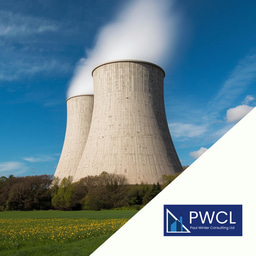
Large nuclear programmes such as Hinkley Point C and Sizewell C continue to represent some of the UK’s largest live construction efforts. Beyond the reactors themselves, these projects drive extensive civil engineering, marine works, logistics infrastructure and transmission assets.
Nuclear construction provides long-term workload certainty for heavy civils and specialist contractors, and continues to shape the UK’s industrial construction capability and supply chain.
The Hidden Pipeline
Alongside new-build assets, industrial retrofits - ranging from electrification and heat recovery to CCUS-ready upgrades - are emerging as a substantial and under-reported pipeline of work.
Retrofitting live industrial facilities introduces significant complexity, requiring careful phasing, shutdown planning and stakeholder coordination, alongside significant funding.
A Programme Management Challenge at National Scale
Taken together, CCUS, hydrogen, EfW, nuclear and industrial retrofits represent a shift from discrete renewable projects to interconnected industrial systems. The scale and interdependency of these developments mean that delivery risk is increasingly tied to programme management, sequencing, procurement strategy and stakeholder coordination.
For developers, investors and policymakers, the UK’s decarbonisation journey is not just an energy transition, it is an industrial transformation programme.
A Future Driven By Decarbonisation
The coming decade is likely to see unprecedented levels of industrial construction activity driven by decarbonisation. While renewable generation will remain vital, it is the supporting industrial infrastructure that will determine whether the UK can deliver a secure, resilient and low-carbon energy system.
For organisations operating in this space, early investment in project governance, delivery capability and integrated programme management will be critical to navigating this next phase of the UK’s energy transition.
We continue to support complex industrial and renewable infrastructure projects across the UK, Europe and internationally, helping clients plan, procure and deliver assets that underpin the country’s low-carbon future.

Paul is the founding Director of Paul Winter Consulting which he formed in 2015. He is particularly focused on helping Clients understand the Construction Process and help them maximize their returns on investment. He has worked at senior level in Major International Companies and his experience ranges from the construction of Complex infrastructure projects from Power to airports and Roads For the last 15 years Paul has provided support to a number of clients including: - EPC Contractors - European Companies looking to enter the UK Market - Client side Project Management - Commercial and Project Management Training - Advising on Project funding He is focused on developing strategies for investment in Energy from Waste Projects and delivering the financial outcomes through effective project management.




Please sign in or register for FREE
If you are a registered user on Energy from Waste Network, please sign in