What the Pause in GGSS Means for Developers and Investors
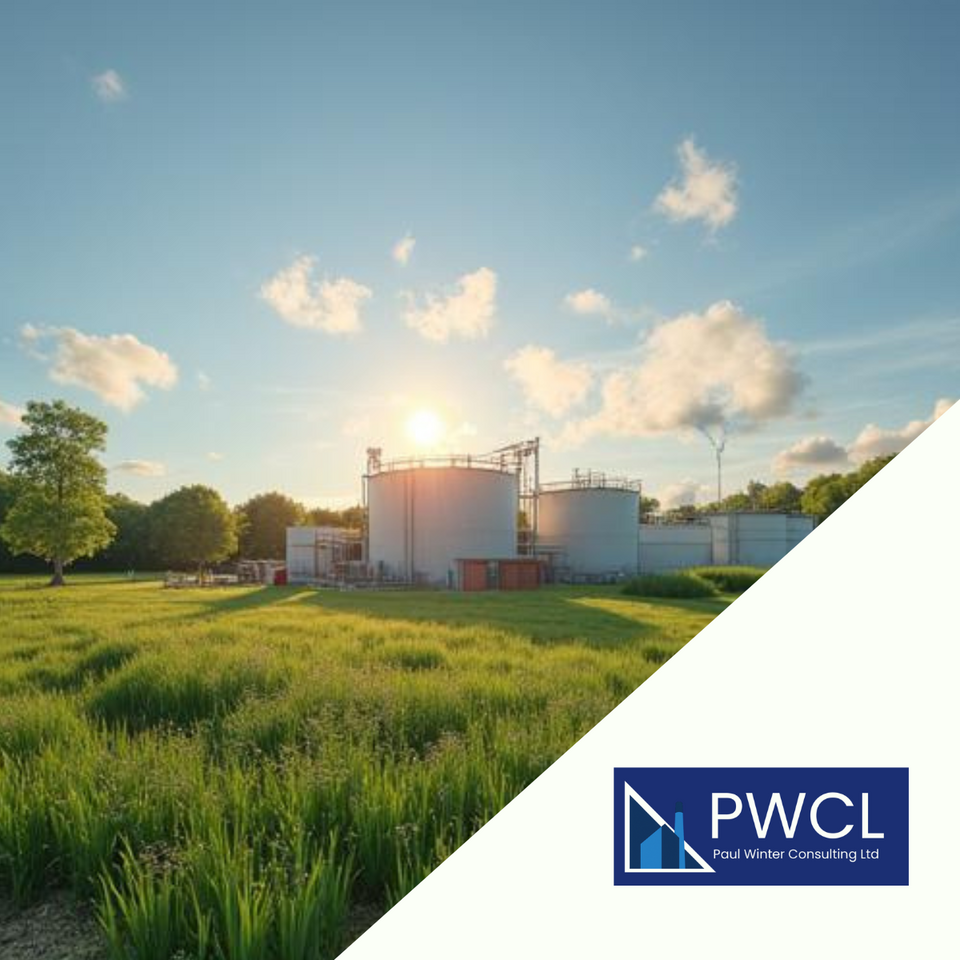
The UK’s Green Gas Support Scheme (GGSS) has been a cornerstone of biomethane deployment since its much-anticipated launch in 2021, helping to underpin investment in anaerobic digestion (AD) projects across the country.
As the current scheme approaches the end of its primary support window, the sector finds itself in a familiar holding pattern: awaiting clarity on what could possibly come next.
While no successor mechanism has been formally confirmed as yet, and with only 2 years left of the current scheme, developers, investors, and contractors are increasingly conscious that the next phase of UK renewable gas policy will shape project pipelines, financing structures, and construction timelines for years to come; breeding caution and hesitancy across the board.
What DESNZ Is Signalling
The Department for Energy Security and Net Zero (DESNZ) has repeatedly emphasised the role of biomethane in delivering energy security, decarbonising heat, and supporting rural economies.
In recent policy commentary, the department has highlighted renewable gas as part of a broader transition that includes electrification, hydrogen, and carbon capture, reflecting a technology-agnostic approach to achieving Net Zero while maintaining “system resilience”.
However, DESNZ has also been clear that subsidy frameworks must evolve to balance consumer costs with long-term decarbonisation goals.
This tension between supporting deployment and managing bill impacts has contributed to the current period of uncertainty for the biomethane market.
A Period of “Stasis” for the Sector
For developers, the lack of confirmed post-GGSS policy creates a temporary slowdown in final investment decisions, as projects in late-stage development are continuing rapidly in order to meet the 2028 deadline,, but new pipeline activity is much more cautious, with investors waiting for clarity on:
- Successor incentive mechanisms or contract structures
- Eligibility criteria for future biomethane support
- Potential integration with carbon capture, hydrogen blending, or industrial decarbonisation policies
- The role of private corporate offtake agreements as a complement or alternative to government support
This mirrors earlier cycles in the sector, where policy transitions created short pauses before the next wave of deployment accelerated.
Biomethane’s Strategic Role
Despite policy uncertainty, biomethane remains strategically important to the UK’s energy system as, unlike intermittent renewables, renewable gas provides dispatchable, storable energy that supports grid stability and industrial heat demand, particularly in sectors where electrification is difficult.
DESNZ has consistently framed renewable gas as part of a diversified energy mix that strengthens resilience, reduces reliance on imported gas, and supports rural and agricultural economies, and rightly so.
Commercial Signals Are Still Strong
Even as government policy awaits its next iteration, commercial demand for biomethane is increasing.
Long-term corporate offtake agreements, industrial decarbonisation commitments, and the growing interest in bio-CO₂ and CCUS integration are creating new revenue pathways beyond traditional subsidy structures.
This suggests that while policy clarity will be important, biomethane’s market fundamentals are strengthening, particularly where projects can combine gas sales, carbon capture, and digestate value streams.
What’s In Store For Project Delivery?
For project managers and infrastructure specialists, the current policy “pause” does not remove the need for planning, permitting, and technical development.
In fact, the next policy phase is likely to trigger another surge in shovel-ready projects, similar to the acceleration seen before previous scheme deadlines.
Developers who continue feasibility, design, and permitting work during this period will be best positioned to move quickly once policy certainty returns.
Renewable Gas in Transition
The UK’s approach to renewable gas is evolving, but its strategic importance is not in question. The current GGSS holding period should be viewed less as a slowdown and more as a transition phase: one that will shape the next generation of biomethane infrastructure, financing models, and integration with wider net-zero technologies.
At PWCL, we’re continuing to support developers through feasibility, planning, procurement, and project delivery, ensuring projects are ready to move when the policy landscape becomes clearer.

Paul is the founding Director of Paul Winter Consulting which he formed in 2015. He is particularly focused on helping Clients understand the Construction Process and help them maximize their returns on investment. He has worked at senior level in Major International Companies and his experience ranges from the construction of Complex infrastructure projects from Power to airports and Roads For the last 15 years Paul has provided support to a number of clients including: - EPC Contractors - European Companies looking to enter the UK Market - Client side Project Management - Commercial and Project Management Training - Advising on Project funding He is focused on developing strategies for investment in Energy from Waste Projects and delivering the financial outcomes through effective project management.



Please sign in or register for FREE
If you are a registered user on Energy from Waste Network, please sign in